







Few conversations create more tension in modern Christian culture than feminism.
For some Christians, feminism represents justice, dignity, equality, and the liberation of women from oppressive systems. For others, it feels deeply incompatible with biblical authority, family structure, or traditional Christian teachings.
And in Nigeria — where faith, gender expectations, culture, and modernity constantly collide — the conversation becomes even more layered.
So what do Nigerian Christian women actually think?
The answer is: many different things.
Some fully embrace feminism. Some reject the label entirely while agreeing with certain feminist ideas. Some believe feminism has helped women find their voice. Others believe parts of it directly conflict with Christianity.
There is no singular “Christian female opinion” in Nigeria.
And perhaps that complexity is exactly what makes the conversation worth having.
“I Believe in Equality, But I Don’t Call Myself a Feminist”
For many Nigerian Christian women, the tension begins with the word itself.
They believe women deserve equal dignity, education, opportunity, safety, fair treatment, and leadership opportunities. They oppose abuse, misogyny, forced silence, and harmful cultural expectations.
But they hesitate to identify as feminists because they associate modern feminism with hostility toward faith, marriage, motherhood, or biblical gender distinctions.
One Lagos-based Christian creative explains it this way:
“I believe women are equal before God. I believe women should lead, build businesses, preach if they are called, and use their gifts fully. But the version of feminism I often see online feels angry at men, angry at family, and sometimes angry at faith itself. That’s where I disconnect.”
This position is probably one of the most common among young Nigerian Christian women today: agreement with feminist concerns, but discomfort with feminist identity.
“Christianity Already Gave Women Value”
Some women argue that Christianity itself was radically liberating for women long before modern feminism existed.
They point to how Jesus Christ interacted with women publicly, taught them directly, defended them socially, and gave them dignity in societies where women were often marginalized.
For these women, feminism is not necessarily needed as a framework because they believe biblical Christianity already establishes female worth and spiritual equality.
One Abuja-based worship leader says:
“The Church has flaws because human beings have flaws. But Jesus never treated women as less-than. I don’t think I need feminism to know I matter to God.”
Many women in this category feel that cultural patriarchy — not Christianity itself — is often the real issue.
“Nigerian Church Culture Sometimes Makes Feminism Feel Necessary”
Other Christian women are more openly sympathetic toward feminism because of personal experiences inside church culture.
Some speak about being silenced in leadership spaces. Others describe pressure to shrink themselves intellectually or professionally to appear “submissive.” Some discuss purity culture, marriage pressure, unequal expectations between men and women, or environments where women’s ambitions were treated suspiciously.
For these women, feminism became less about ideology and more about survival, voice, and dignity.
A Christian entrepreneur in Lagos explains:
“A lot of Nigerian Christian women became feminists because they got tired. Tired of double standards. Tired of always being told to endure things men would never be asked to endure.”
These women do not necessarily reject Christianity.
Many remain deeply committed to faith while believing the Nigerian Church still has unresolved gender problems.
“Online Feminism and Real-Life Feminism Are Different”
Several women also distinguish between internet feminism and everyday advocacy for women.
They argue that social media often amplifies the loudest, harshest, or most extreme versions of feminism, making the conversation feel more polarized than it actually is.
Offline, many Nigerian Christian women simply want practical things: safety, respect, opportunity, fair partnerships, freedom from abuse, and the ability to fully express their gifts without unnecessary restriction.
One media strategist puts it this way:
“A lot of women people call feminists are honestly just asking to be treated like full human beings.”
This perspective tends to reject ideological extremes while still acknowledging structural issues women face.
“Some Forms of Feminism Conflict With My Faith”
Not all Christian women are undecided about the issue.
Some are firmly opposed to feminism because they believe certain feminist frameworks directly contradict biblical teachings around sexuality, gender, family, authority, or morality.
These women often feel that contemporary feminism increasingly functions less like a social movement and more like a worldview competing with Christianity itself.
A Port Harcourt-based Bible teacher says:
“There are aspects of feminism I appreciate historically — education, voting rights, protection against abuse. But modern feminism sometimes asks women to define freedom without God, and that’s where I personally draw the line.”
For many women in this category, the concern is not women’s empowerment itself, but the philosophical direction of some feminist movements.
“The Nigerian Context Changes Everything”
One thing nearly every perspective agrees on is this:
Nigeria complicates the conversation.
Because gender discussions here are shaped not only by religion, but by economics, family structures, ethnicity, tradition, marriage expectations, and social survival.
A Christian woman in Nigeria may simultaneously experience empowerment in one space and restriction in another.
She may lead a company but still face intense pressure around marriage.
She may be spiritually respected but professionally underestimated.
She may reject feminism intellectually while benefiting from freedoms earlier feminist movements helped create.
The conversation is rarely simple.
Maybe the Real Question Is Bigger Than Labels
What becomes obvious when listening to Nigerian Christian women is that many are less interested in ideological camps and more interested in practical realities.
Can women fully use their gifts?
Can marriages reflect mutual honor rather than domination?
Can churches create healthy leadership cultures?
Can women feel spiritually safe, intellectually respected, and emotionally seen?
Can faith and ambition coexist?
Can femininity exist without limitation?
For some women, feminism helps answer those questions.
For others, Christianity alone does.
And for many, they are still trying to figure it out in real time.
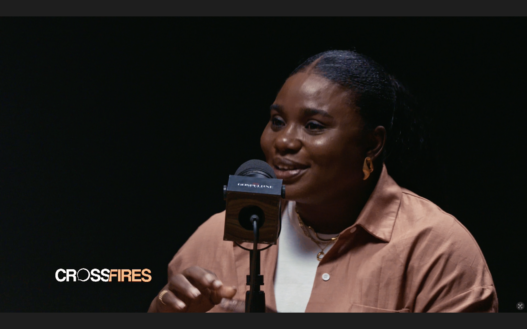
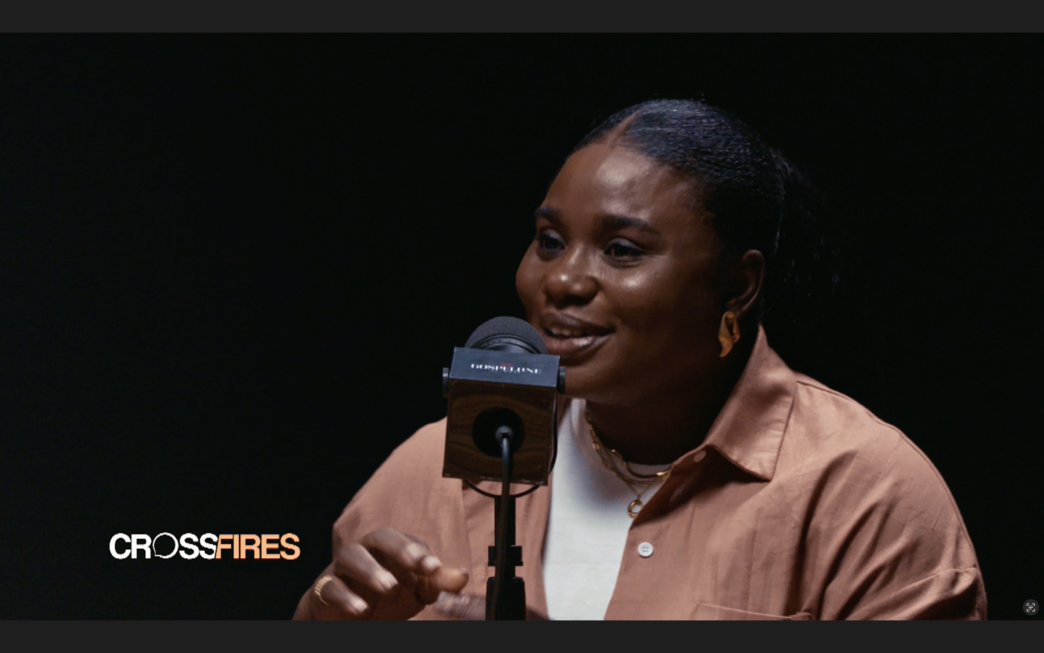
Watch the new episode of Crossfires here.





Hi, this is a comment.
To get started with moderating, editing, and deleting comments, please visit the Comments screen in the dashboard.
Commenter avatars come from Gravatar.