










Fantasy and speculative storytelling have become increasingly important within modern creative culture.
From anime to science fiction to fantasy literature, audiences are deeply drawn toward immersive worlds filled with mythology, symbolism, moral conflict, and imaginative possibility.
Christian creatives are no exception.
In fact, many believers are especially drawn to worldbuilding because Christianity itself contains rich themes of cosmic conflict, destiny, sacrifice, redemption, supernatural reality, and moral transformation.
Fantasy creates space to explore these themes creatively.
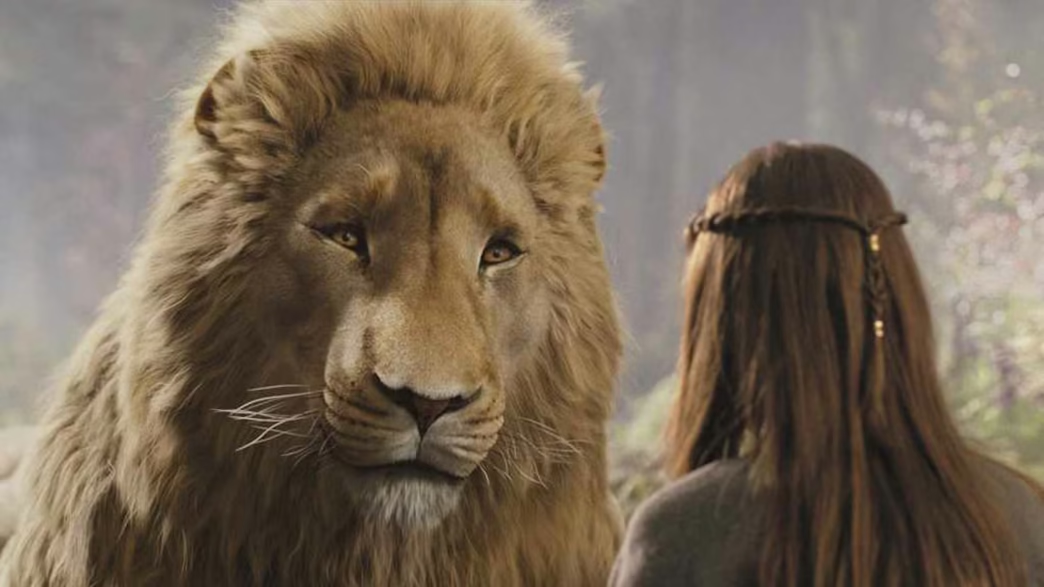
Writers like C.S. Lewis and J.R.R. Tolkien demonstrated this power decades ago. Their stories explored spiritual ideas through imaginative worlds rather than direct preaching.
Modern audiences continue responding strongly to this approach.
Anime culture has also influenced many younger Christian creatives. Themes like perseverance, identity, friendship, sacrifice, chosen purpose, and spiritual warfare appear frequently within anime storytelling.
These themes resonate because they mirror real human struggles.
Fantasy worlds also allow creators to communicate emotional truths symbolically. Dragons, kingdoms, magic systems, supernatural beings, and alternate worlds often function as metaphors for deeper questions about humanity and morality.
Christian creatives increasingly recognize that imagination itself can become spiritually meaningful.
This is why many younger creators are exploring speculative fiction, fantasy films, animated storytelling, graphic novels, and immersive narrative universes.
Worldbuilding also extends beyond fiction.
Modern brands, music artists, and media companies increasingly build narrative ecosystems around their projects. Album visuals, merchandise, lore, symbols, aesthetics, fictional languages, and interactive communities all contribute to immersive audience engagement.
Examples of this appear throughout pop culture. Franchises like Marvel, Star Wars, and Avatar succeed partly because audiences emotionally invest in entire worlds rather than isolated stories.
Christian creatives are beginning to explore similar possibilities.
The challenge, however, is originality.
Many faith-based fantasy projects struggle because they imitate mainstream works too closely without developing distinct imaginative identities.
Strong worldbuilding requires depth.
It requires history, symbolism, emotional realism, and internal consistency.
But when done well, fantasy becomes more than entertainment.
It becomes a way of helping audiences imagine hope, courage, sacrifice, and transcendence.








Your content is a go-to source for me when I need information. Great work, as always!
I love how your posts are always so well-structured and easy to follow. Keep it up!
I\’m glad you enjoyed it! Your kind words inspire me to keep creating informative content.
I love how your posts are always so well-structured and easy to follow. Keep it up!