






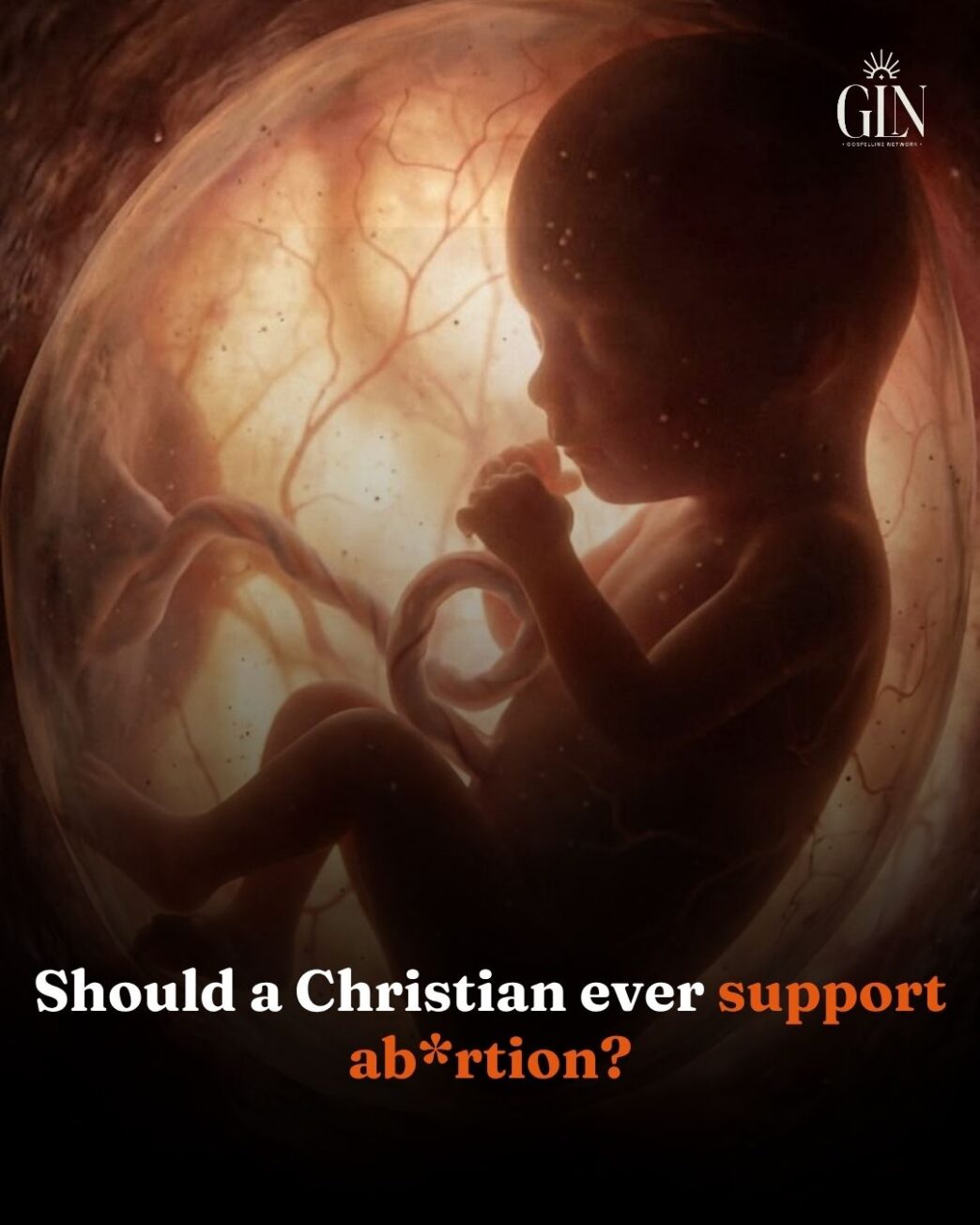
When conviction meets compassion, easy answers disappear.
Some conversations cannot be settled with a Bible verse quoted in isolation or a medical textbook read in abstraction.
They demand something deeper, a willingness to wrestle with truth, acknowledge human pain, and confront the uncomfortable realities that exist where faith and life intersect.
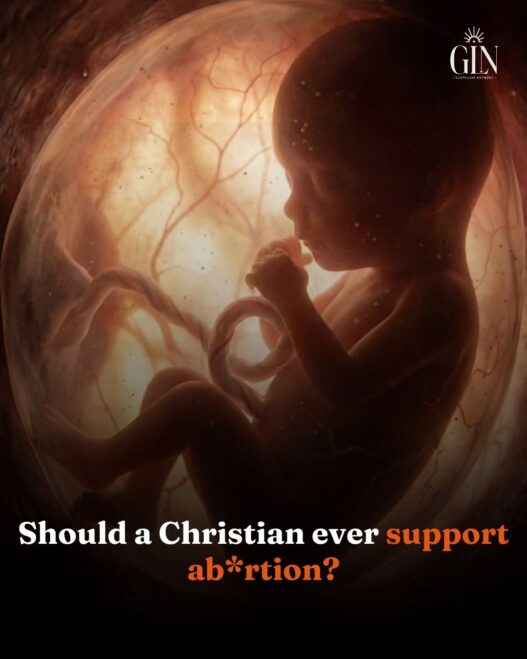
Few issues reveal the tension between biblical conviction and human compassion as profoundly as abortion.
For decades, abortion has remained one of Christianity’s most divisive ethical questions.
It has separated denominations, polarized congregations, influenced public policy, and left countless believers wondering how biblical conviction should respond to deeply personal tragedies. Beyond political slogans and social media debates lies a far more profound question:
What does it truly mean to value life while extending compassion to those carrying unimaginable burdens?
The conversation becomes even more complicated when real lives replace hypothetical scenarios.
What happens when pregnancy threatens the life of the mother?
What should Christians believe when a pregnancy results from rape?
How should believers respond when severe fetal abnormalities are diagnosed?
Does protecting life always mean the same thing in every circumstance, or do extraordinary situations demand careful discernment rather than absolute declarations?
These are not questions that disappear simply because they are uncomfortable.
They are questions the Church must continue asking,
Bringing together voices from medicine, law, theology, mental health advocacy, and lived experience, the discussion revealed that abortion is not merely a legal or political issue.
It is a deeply human conversation, one that challenges Christians to think carefully about Scripture, ethics, suffering, and the sacredness of every human life.
One conviction united everyone from the outset: Every human being possesses value.
Yet agreement quickly gave way to a much older question.
When does human life begin?
For Dr. Opeyemi Ilorin, a medical doctor, the conversation centered on human development and the characteristics that distinguish human beings.
She argued that the ability to reason is a defining feature of humanity, explaining,
“I would not put a fetus in the category of being human.”
Her perspective reflected questions many healthcare professionals encounter daily as they balance biology, medicine, ethics, and patient care.
It was a reminder that medical practitioners are often required to make difficult decisions where scientific realities and moral convictions collide.
That position, however, was firmly challenged by Evangelist Ekaji Ibe, whose argument rested on both biological development and biblical theology.
“Life begins when the sperm meets the egg and a zygote is formed.”
For him, life is not something that suddenly appears at birth but a continuous process that begins at conception.
Interrupting that process, he argued, that interrupting a life already known by God is a sin.
His conviction echoed throughout the discussion.
“The Lord is the giver of life.”
Drawing from Psalm 139, where David declares that God knit him together in his mother’s womb, and Jeremiah 1:5, where God tells Jeremiah, “Before I formed you in the womb I knew you,” Ekaji maintained that unborn children are already image bearers of God possessing dignity not because of what they can do, but because of who created them.
He further argued,
“Every child should be given their right to develop properly and come into the world as an image bearer.”
It was a position rooted in the Christian doctrine the belief that every human being reflects the image of God and therefore possesses inherent worth from the very beginning of life.
Yet theology alone could not answer every question raised.
The conversation shifted into the realities that often make abortion one of the most emotionally complex ethical issues Christians face.
Ectopic pregnancies,
Severe fetal abnormalities,
Pregnancies resulting from rape.
Situations where continuing a pregnancy could threaten the mother’s life.
These realities exposed the limits of simplistic answers.
Even Ekaji acknowledged that certain medical emergencies require careful ethical distinctions, particularly where the primary intention is to save the mother’s life rather than deliberately end the life of the unborn child.
His response highlighted an important principle within Christian ethics: difficult circumstances that demand wisdom without abandoning biblical conviction.
Perhaps the most emotionally compelling moment emerged through the testimony of Oluwarantimisirere, a parent raising a son with cerebral palsy.
Her story challenged assumptions that human value can be measured by intellectual ability or physical capability.
If the ability to reason determines who qualifies as fully human, what does that imply for children and adults living with profound disabilities?
It was not merely a philosophical question,
It was personal.
Reflecting on her journey, she observed,
“People are shaped by their experiences.”
Rather than speaking from theory, she spoke from years of caregiving, sacrifice, uncertainty, and hope.
Her testimony revealed that the child many might describe as a burden had instead become one of life’s greatest teachers.
She mourned the life she once imagined.
She embraced the life she had been given.
And somewhere between those two realities, she discovered purpose.
Her story quietly dismantled one of society’s most persistent assumptions that a difficult life is somehow a life less worth living.
The conversation became equally compelling when Dr. Ayomide Fayinto, another medical doctor and women’s health advocate, challenged a common perception surrounding abortion.
Many describe abortion as choosing the easier path,
Her experience suggested otherwise.
“Abortion itself is very painful.”
She reminded listeners that beyond moral debates are women who often carry physical pain, emotional trauma, medical complications, and lifelong psychological consequences.
Decisions surrounding abortion are rarely made lightly, particularly in situations involving abuse, poverty, severe medical diagnoses, or profound personal crises.
Her perspective also introduced another important question.
Is Christianity necessarily a call to suffering?
While acknowledging that following Christ involves sacrifice, she argued that believers should be careful not to interpret every painful circumstance as something God expects people to embrace without question.
That observation prompted another thoughtful response.
Ekaji pointed to the history of Christianity itself.
The earliest believers rescued abandoned infants from Roman streets.
Missionaries defended vulnerable children rejected by society.
Followers of Christ have consistently demonstrated that Christian love often expresses itself through costly sacrifice rather than personal convenience.
For him, caring for vulnerable life even when difficult, is woven into the very fabric of Christian discipleship.
It was not an argument for suffering’s sake.
It was an invitation to imitate a savior whose love was sacrificial.
Perhaps the most remarkable aspect of the discussion was not that disagreements existed.
It was how those disagreements unfolded.
No one shouted,
No one caricatured opposing views,
Doctors challenged theologians.
Lawyers questioned physicians,
Personal testimonies confronted abstract theories,
Scripture met science,
Experience met doctrine,
Compassion met conviction.
Instead of producing winners and losers, the conversation produced something increasingly rare in today’s culture thoughtful disagreement rooted in mutual respect.
And perhaps that is exactly what conversations like these should accomplish.
The Church has never been called to avoid difficult questions.
It has been called to pursue truth with humility.
Abortion continues to confront Christians with realities that cannot be solved through slogans alone.
Every pregnancy carries its own story.
Every family carries its own burden. Every ethical dilemma demands both conviction and compassion.
While Scripture consistently affirms the sacredness of life, it also calls believers to bear one another’s burdens, to show mercy, and to walk wisely through a broken world where suffering often complicates decisions that appear straightforward from a distance.
Perhaps that is the lesson worth holding onto.
The strongest Christian witness is not found in speaking the loudest but in thinking the deepest, loving the hardest, and refusing to separate truth from grace.
Difficult conversations will continue to arise because we live in a world marked by brokenness, yet those conversations also present opportunities for the Church to demonstrate the character of Christ firm in conviction, rich in compassion, and unwavering in its commitment to the dignity of every human life.
Because every conversation about abortion is ultimately more than a debate about choice.
It is a conversation about life,
About suffering,
About hope,
About grace,
And about the God who remains sovereign over them all.