







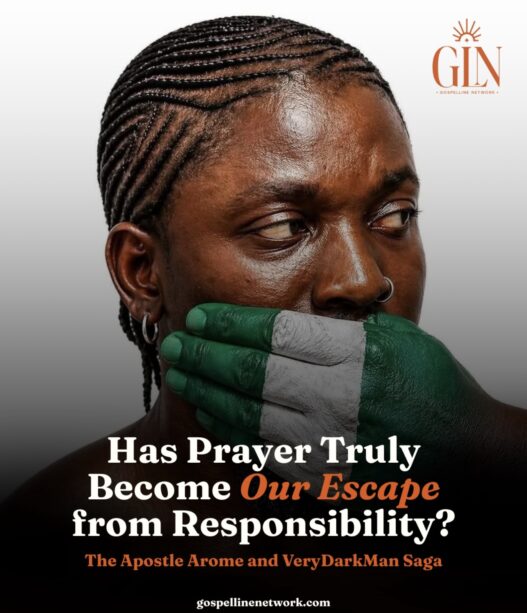
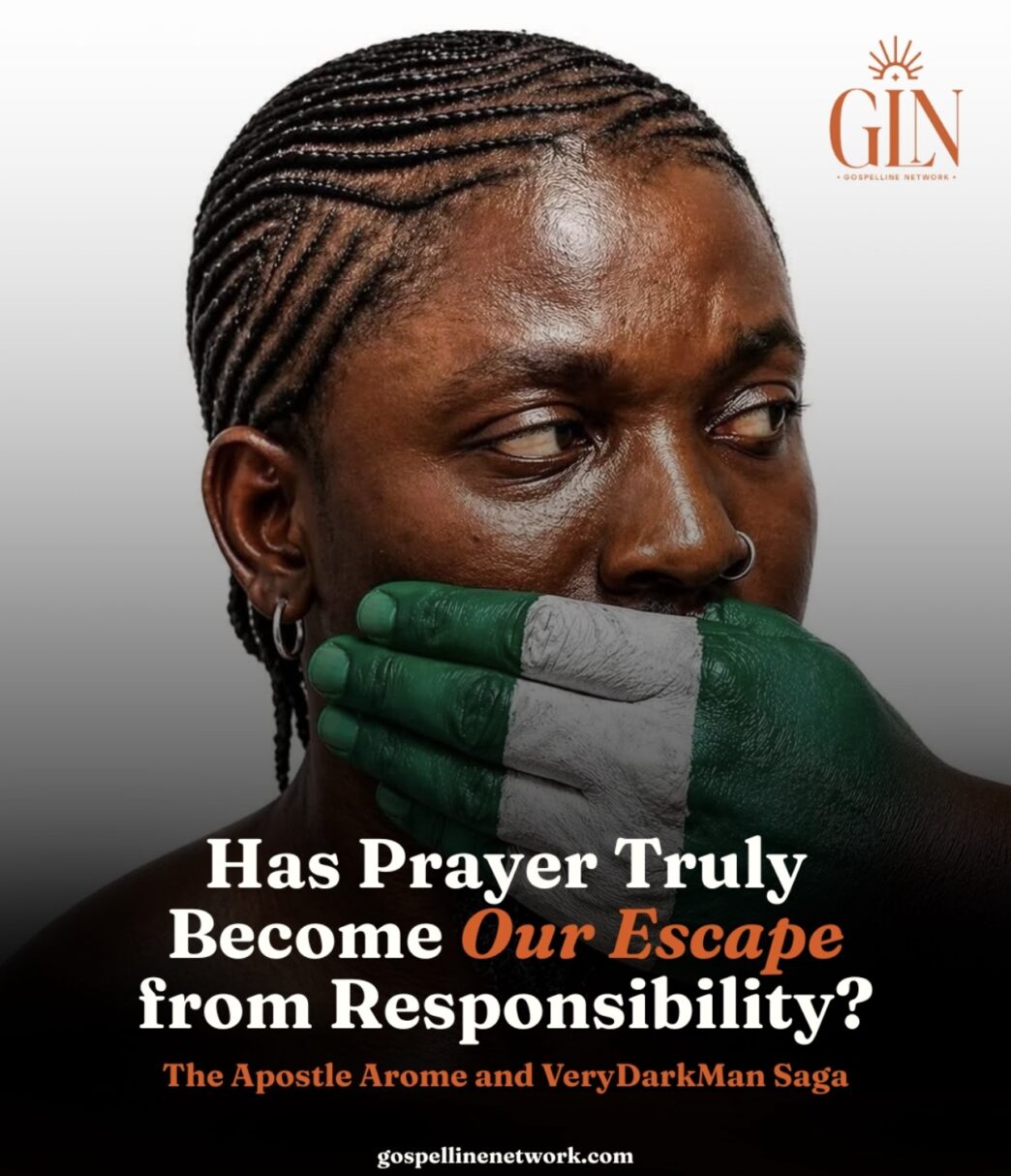
The Apostle Arome and VeryDarkMan Saga
The recent viral clash between social media critic VeryDarkMan (VDM) and Apostle Arome Osayi has drawn the Nigerian internet into a heated debate over a question that reaches far beyond two public personalities Can a nation pray its way into progress?
The controversy began when a sermon clip from Apostle Arome circulated online, in which he argued that Nigeria’s primary global calling is spiritual revival rather than technological or industrial output like that of China.
The statement immediately drew sharp pushback from VDM, who mocked the idea of exporting prayers while other nations export technology, infrastructure, and manufactured goods. The disagreement quickly spilled into personal attacks, satire, and outrage across social media platforms, leaving many Christians defensive and critics emboldened.
Yet beneath the viral noise, the online insults, and the defensive reactions lies a friction that the Nigerian Church cannot afford to ignore. VDM’s critique, despite its aggressive and controversial delivery, gave voice to a genuine frustration felt by millions of citizens: a deeply religious society struggling to translate its vibrant spiritual life into tangible societal progress.
When we look around at our nation’s economic strains, infrastructural failures, and social challenges, the instinctive response for many within the faith has been to gather, bow our heads, and ask God to fix what is broken. While petitioning Heaven is foundational to the Christian walk, a critical question surfaces when our devotion stops at intercessors’ benches: Have we allowed prayer to become a quiet refuge where we retreat from the difficult, tedious work of building solutions?
Christianity was never meant to produce passive citizens who outsource the burden of human progress to prayer. God created humanity with intellect, capacity, and creative agency, placing us in a world rich with potential and asking us to steward it. When faith is reduced to an excuse for bypassing practical human effort, it misinterprets the very nature of divine partnership.
In the Epistle of James, the relationship between inner conviction and external action is stated with uncompromising clarity: faith without works is dead.
In a modern context, “works” cannot be restricted to church activities or moral decency alone. Works include the rigor of scientific research, the discipline of business development, the precision of engineering, the integrity of public policy, and the dedication of honest craftsmanship.
Faith is not an alternative to competence; it is meant to be the conviction that drives competence toward noble ends.
The scriptures themselves offer a rich tapestry of believers who understood this balance. Nehemiah wept and prayed deeply over the ruined walls of Jerusalem, but his prayer was immediately followed by administrative brilliance: conducting night inspections, procuring building materials, organizing shifts of labor, and establishing security protocols. Joseph received divine revelation to interpret Pharaoh’s dreams about an impending famine, but the revelation alone did not save Egypt; Joseph’s ability to design a national grain preservation system, establish logistics, and manage regional economics kept millions alive.
In both instances, spiritual revelation did not replace practical responsibility, it demanded it.
Somewhere along the line, a false dichotomy crept into our shared theology: the idea that prayer, fasting, and church attendance are sacred, while mathematics, agriculture, technology, and governance are purely secular.
Yet, if God is the creator of order, logic, and beauty, then engaging in problem-solving is an act of worship.
A Christian engineer building durable roads is serving their neighbor. An entrepreneur creating sustainable jobs is reflecting God’s provision. A doctor spending years mastering medicine to cure disease is extending divine compassion.
Perhaps the greatest threat to a nation’s transformation is not a lack of devotion, but a theology that excuses us from the hard labor of citizenship.
Prayer aligns our hearts with God’s character, giving us the moral clarity, stamina, and wisdom required to act. But prayer was never intended to build the bridge, write the policy, code the software, or teach the class. Those tasks require hands, minds, and disciplined labor.
To bridge this divide and see real, lasting transformation in our communities and nation, our approach to faith must mature. Moving beyond asking God to do what He has already empowered us to execute requires a practical shift in how we view our daily callings.
Seen through this lens, science, art, technology, and business cease to be secular distractions; they reveal themselves as the primary channels through which answers to prayer manifest in the physical world.
Spiritual fervor without professional competence inevitably leads to frustration, which is why the Church must actively encourage rigorous education, skill acquisition, and systemic thinking alongside spiritual growth.
When we pray for economic relief, let us also build ethical, enduring enterprises. When we pray for good governance, let us raise and support upright public servants. When we pray for health, let us invest in medical science, research, and public sanitation.
Prayer opens the door to God’s heart, but responsibility steps through that door to shape the world. Rather than reacting with anger when critics question our fruitfulness, let us roll up our sleeves, step into our callings, and bring the practical solutions our society so desperately needs.