







What we know since Toluwanisings Passing
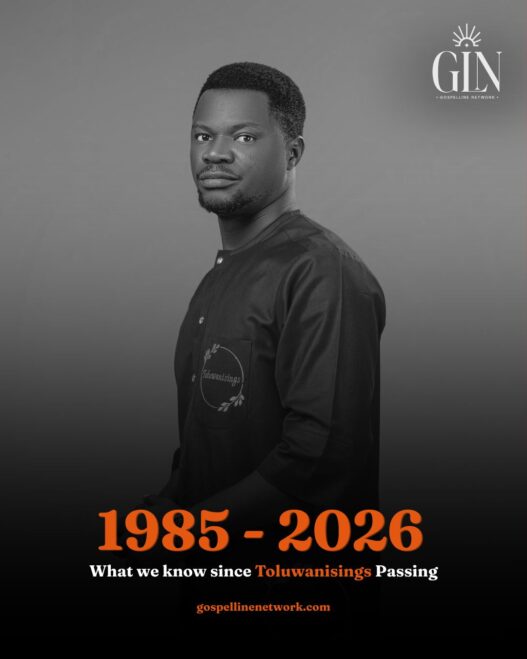
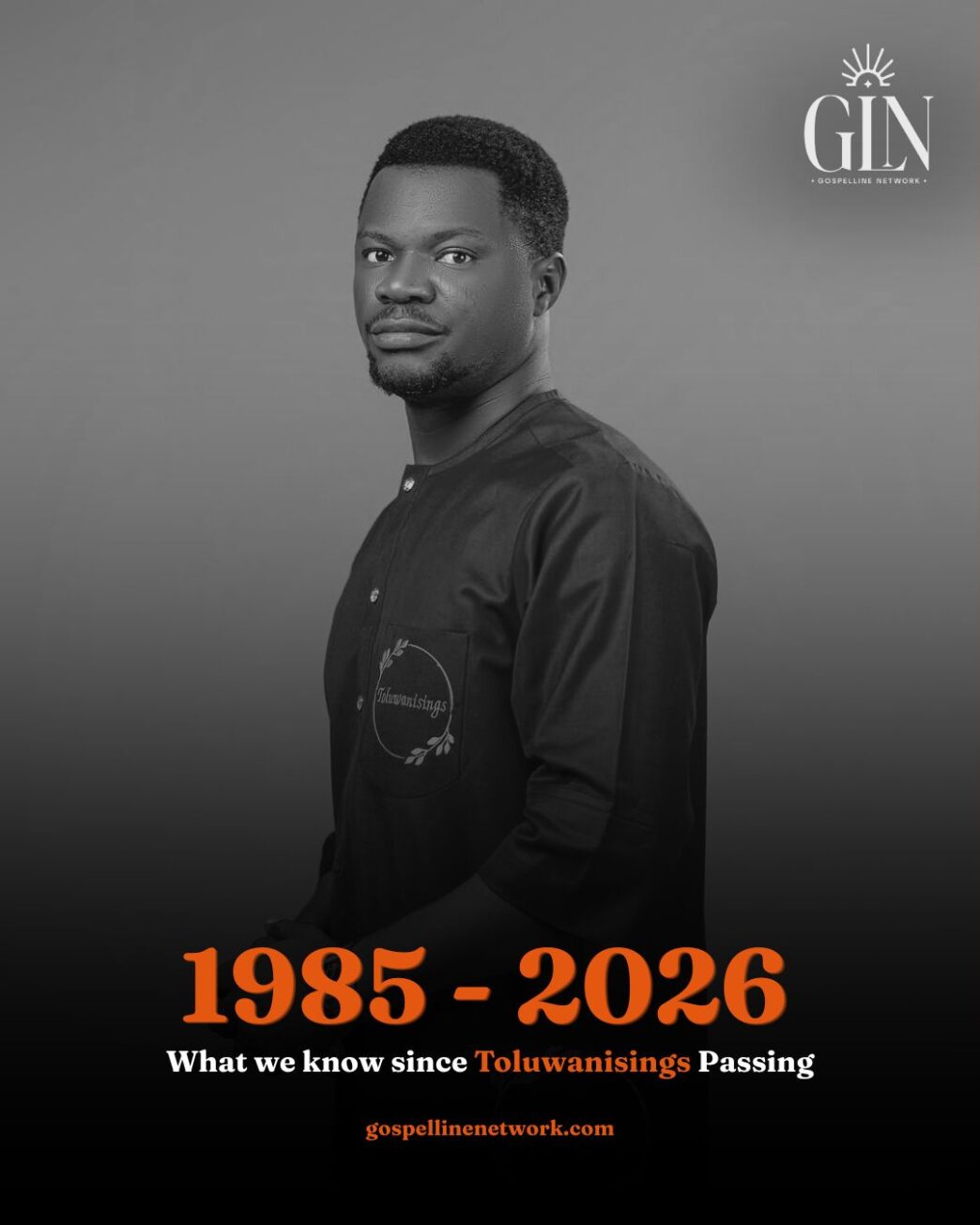
Nigerian gospel singer and praise minister Toluwanisings, whose real name was Olayemi Bayonile Bolaji, has died at the age of 41.
His death, announced on October 14, 2026, has brought an abrupt end to a musical journey that took him from Fuji music into gospel ministry. Known for his energetic Yoruba praise medleys and songs celebrating the greatness of God, Toluwanisings built a sound that connected indigenous musical traditions with contemporary gospel.
Yet beyond the songs that brought him recognition lies the story of a man whose faith reshaped his musical direction and became central to the message he shared with his audience.
His journey into gospel music did not begin where many of his listeners might have expected. Born on July 8, 1985, and from Ikirun in Osun State, he attended Aagba Methodist High School before studying Estate Management and Valuation at Yaba College of Technology. Reports recounting an interview with him describe his upbringing in a Muslim family, his early use of the name Sodiq and his beginnings as a Fuji performer before he embraced Christianity.
That change marked a turning point in his life, redirecting the talent he had already developed towards a different purpose. Music remained his language, but the message he wanted to communicate had changed.
What made that transition distinctive was that he did not completely abandon the musical traditions that had shaped his early career. Instead, he carried the rhythms and energy of Yoruba music into gospel, creating performances that encouraged audiences to participate rather than simply listen. His praise sessions drew on familiar expressions of celebration, giving his music a cultural identity that listeners could recognise while directing the experience towards Christian worship. In a genre where artists often draw on different musical influences to communicate their faith, Toluwanisings developed a style that reflected both where he came from and the spiritual direction he had chosen.
That combination of musical energy and Christian conviction became particularly recognisable in A Very Big God. The title makes a simple but powerful declaration: whatever difficulties people encounter, God remains greater than the circumstances confronting them. For Christian listeners, that message speaks to the assurance that faith offers during uncertainty, disappointment and personal struggles. The song also provides a useful lens through which to consider the wider journey of a musician who moved from one musical identity into another after embracing Christianity. Although the precise inspiration behind the composition should be established from his own recorded account, its message fits within the broader emphasis on praise and confidence in God that characterised his work.
His music extended beyond that one song. Tracks such as Kos’Oluwa Laye, Onibuore and E Lagbara, featuring Apekeola, contributed to a growing catalogue, while Ase Ti Jade, his collaboration with Adeyinka Alaseyori, connected his work with another voice in Yoruba gospel music. His Unreserved Praise series further reflected his commitment to extended expressions of worship. By early 2022, Kos’Oluwa Laye had reportedly surpassed one million streams on Audiomack, an indication that his music was reaching listeners beyond the physical gatherings where he ministered. These recordings helped establish his presence in a gospel scene where live performance, digital distribution and social media increasingly work together to expand an artist’s audience.
As his audience grew, so did the platform supporting his work. Through Toluwani Gospel Music Ministry, known as TOGOMM, he developed a ministry around his music, working alongside a team of musicians and taking his sound to worship gatherings. His growing visibility also reflected the influence of social media on gospel music. In 2021, Woli Agba shared one of his songs online, helping introduce his work to a wider audience. Such exposure can make a significant difference for gospel artists whose music might otherwise remain within the churches, events and communities where they perform. A shared song can travel far beyond its original audience, reaching listeners who may later seek out the artist’s other recordings or attend a live ministry.
The life of a travelling minister, however, also comes with challenges that audiences may not always see. In July 2026, Toluwanisings revealed that he and members of his crew had survived a road accident while returning from a ministry. Sharing images of the damaged vehicle, he recounted how a fully loaded trailer had nearly crushed it. The incident offered a glimpse into the risks that can accompany frequent travel for musicians and their teams, who move between locations to perform at church programmes and worship events. There is no established evidence connecting that accident to his death, but it remains one of the significant incidents publicly associated with the final months of his life.
Then came the news of his death. Reports indicated that Toluwanisings had ministered at In His Presence, a monthly worship gathering hosted by Bidemi Olaoba in Ibadan, on the night of October 13, hours before his passing. For those who followed his ministry, the reported timing brought an especially painful dimension to the announcement: a singer who had recently stood before an audience in worship was suddenly gone. His family confirmed his death and requested prayers, but did not publicly disclose the cause. An account attributed to his personal assistant, Babadunni Gbolabo, described efforts to obtain emergency medical care at several hospitals in Ibadan after the singer reportedly collapsed. However, the account has not independently established the cause of death or demonstrated that any delay in treatment caused his passing. The circumstances surrounding his final hours therefore remain a matter requiring careful reporting rather than speculation.
His death also raises a wider question about the lives and legacies of gospel ministers whose public identities are closely tied to their music. Audiences often encounter the songs long before they know the people who created them. They may remember the praise sessions, sing along to the choruses or find comfort in a particular lyric without knowing the experiences that shaped the artist’s faith. When that artist dies, the music remains familiar, but the person behind it becomes the subject of a different kind of attention. The listener begins to look beyond the recordings, seeking to understand the journey, convictions and experiences that gave the songs their meaning.
In Toluwanisings’ case, the public record offers some insight into that journey: an early musical career in Fuji, a transition into Christianity, a distinctive approach to Yoruba praise and years spent building a gospel ministry. But there is still more to learn about the person beyond the stage, including the private experiences that shaped his faith, the people who supported his work and the plans he may have had for the future. Those closest to him may eventually provide a fuller account of the man behind the music, helping to place his achievements and struggles within the context of his life rather than viewing them only through the news of his death.
For now, his recordings remain an important part of his story. Songs such as A Very Big God and Kos’Oluwa Laye continue to carry the message he communicated through praise, while his collaborations and live performances form part of the contribution he made to Yoruba gospel music. His death has ended his ability to create new music and minister in person, but it has not erased the work already shared with his audience. For listeners who found encouragement in his songs, those recordings may now hold a different significance, serving as reminders of a voice they can no longer hear live.
When a voice falls silent, what it leaves behind becomes part of its legacy. Toluwanisings’ story is not only about a gospel singer who died at 41; it is also about a musician whose journey changed direction through faith, whose sound drew on Yoruba musical traditions and whose ministry gave him a platform to share that faith with others. There are unanswered questions about his final hours and parts of his life that deserve to be documented more fully, but his contribution can still be considered through the music he released and the audiences he reached. His passing leaves a space in the gospel music community, yet the songs remain, carrying the sound of a life spent turning music into praise.