









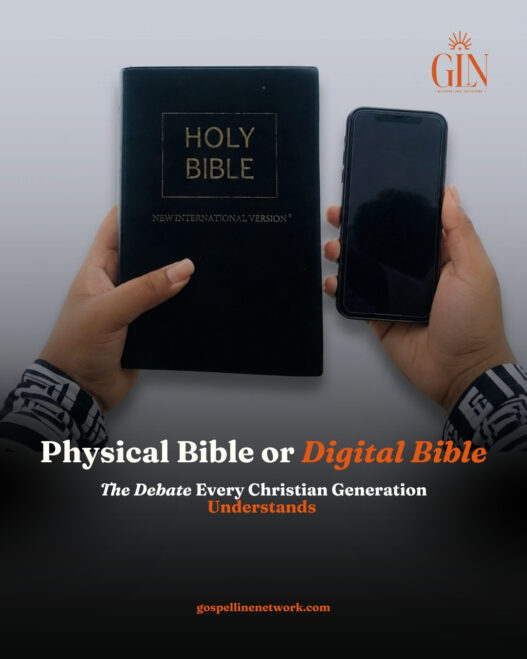
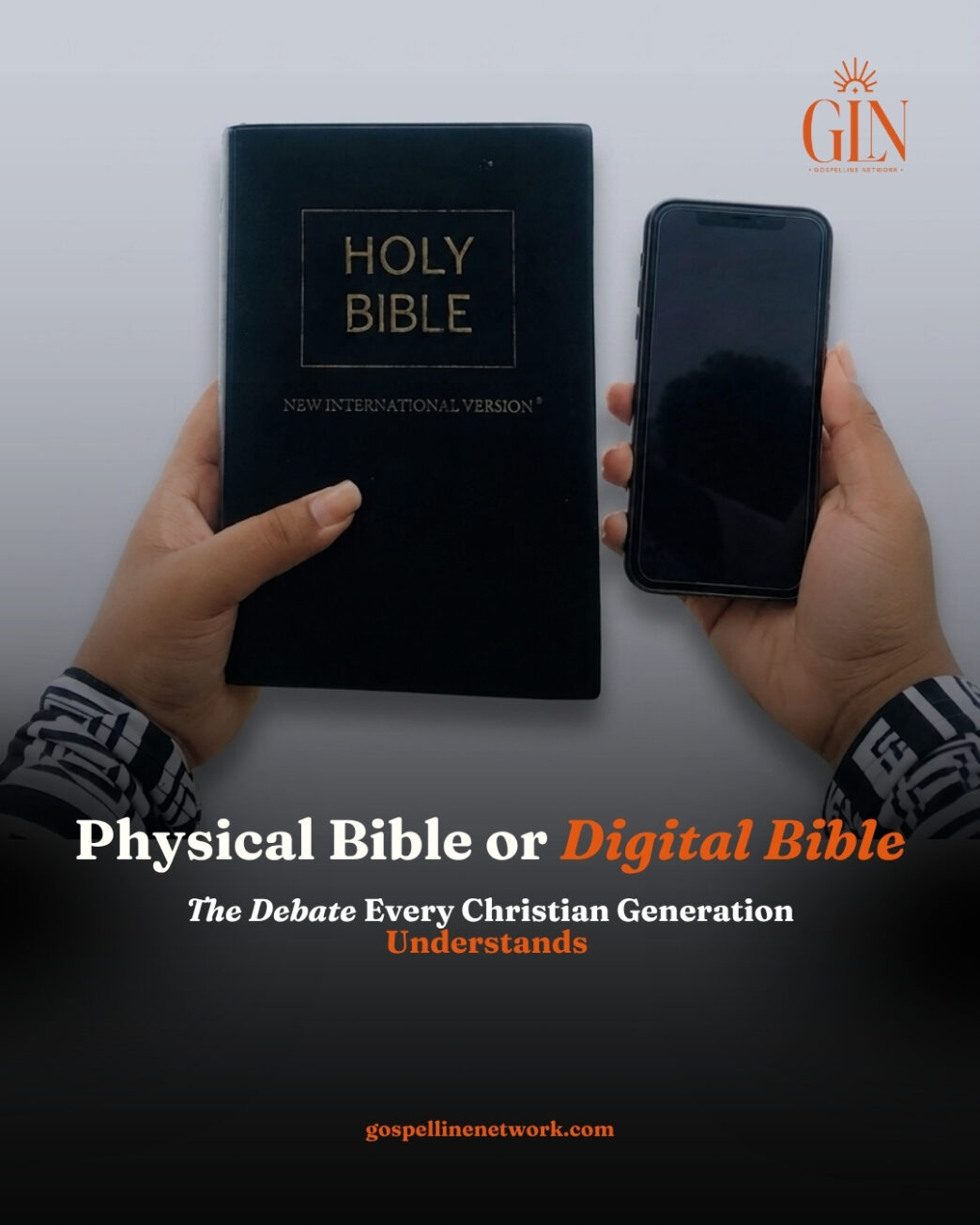
The Debate Every Christian Generation Understands
In many African Christian communities, older believers often have a strong preference for the physical Bible, while many younger believers have embraced digital Bibles on phones and tablets.
For the older generation, the physical Bible represents focus, discipline, familiarity, and intentionality. For the younger generation, the digital Bible represents convenience, accessibility, flexibility, and the ability to explore Scripture in ways that were previously difficult.
The question is not necessarily about declaring one better than the other. Both have advantages, and both have limitations. The important thing is to understand the case for each and allow the individual believer to consider which approach serves their own engagement with Scripture.
The Case for the Physical Bible
One of the strongest arguments for the physical Bible is that it provides fewer distractions. When a believer sits down with a physical Bible, there are usually fewer things competing for their attention. There are no social media notifications, incoming messages, emails, videos, or other applications waiting to be opened. The Bible is simply there, and the reader can give it their attention.
This can encourage a greater sense of discipline. Reading from a physical Bible often requires the believer to make a deliberate decision to sit down and engage with Scripture. There is no need to unlock a device that also contains dozens of other things capable of taking the reader’s attention elsewhere.
Another advantage is that a physical Bible can help a person become familiar with the arrangement of Scripture. With repeated use, readers can develop a sense of where the different books are located. They begin to understand the order of the books and become more comfortable moving through the Bible without depending on a search function.
This familiarity can become useful over time. A believer may hear a passage mentioned in church and immediately know roughly where to turn. They may remember where a particular book is located or recognise the physical position of a familiar passage on the page.
There is also something intentional about physically opening a Bible. For many believers, the experience feels different from opening an application on a phone. Sitting down with a physical Bible can create a sense that this is a particular time set aside for Scripture. The physical object itself can serve as a reminder of the purpose of the moment.
A physical Bible can also become a personal record of a believer’s journey. Pages can be underlined. Important passages can be highlighted. Notes can be written in the margins. Dates can be recorded. A person may return to the same Bible years later and see evidence of what they studied, what spoke to them, and what they were learning at different stages of their lives.
There is also the simple reliability of the physical book. It does not require a battery, an internet connection, an application update, or a charged device. It does not receive notifications, and it does not suddenly present the reader with something unrelated to Scripture.
For believers who value concentration, familiarity with the structure of the Bible, physical engagement, and freedom from digital distractions, the physical Bible offers a compelling experience.
The Case for the Digital Bible
The strongest argument for the digital Bible may be its convenience. A complete Bible can fit inside a device that most people already carry everywhere. A believer does not necessarily need to remember to pack a Bible before leaving home. The Bible can remain available throughout the day.
Digital Bibles also make it possible to access multiple translations and versions almost immediately. A reader can move from one translation to another without having to carry several physical Bibles. This can be particularly useful when studying a passage and wanting to understand how different translations communicate the same text.
Search is another major advantage. Instead of turning through several pages to find a particular verse, word, or passage, the reader can search for it within seconds. This can make Bible study faster and allow someone to investigate themes and passages that might otherwise take considerably longer to locate.
Digital Bibles also make cross referencing much easier. A reader can move from one passage to another quickly and return to the original passage without losing their place. This can be particularly useful when studying a subject that appears in several parts of Scripture.
There is also the advantage of digital notes, highlights, bookmarks, and reading plans. A believer can save important passages, record thoughts, create personal notes, and organise their reading without carrying additional materials. Depending on the application, these notes and highlights may also be synchronised across different devices.
The digital Bible can also provide resources beyond the biblical text itself. Some applications include audio Bibles, commentaries, dictionaries, maps, original language tools, study notes, and other resources. A believer studying a difficult passage can therefore have access to a considerable amount of information without needing a physical library beside them.
Travel is another area where digital Bibles are particularly useful. Carrying one physical Bible may already be manageable, but carrying several translations, study materials, and reference books can become impractical. A phone or tablet can contain all of these resources in one place.
Digital Bibles can also provide greater accessibility for people who may benefit from adjustable text sizes, audio reading, or other digital features. For some believers, these features can make Scripture easier to access and engage with regularly.
For believers who value convenience, accessibility, research, multiple translations, quick searching, and the ability to carry extensive biblical resources anywhere, the digital Bible offers significant advantages.
The Other Side of the Convenience
There is, however, one important consideration that cannot easily be separated from the digital Bible: the device itself can be a source of distraction.
The same phone that contains the Bible can also contain social media, messaging applications, entertainment, emails, games, news, and countless other distractions. A person may open their phone intending to read Scripture and find themselves responding to a message five minutes later.
This does not mean that digital Bible users are necessarily less disciplined. It simply means that the digital environment requires a certain level of awareness and self control.
The physical Bible has the advantage of removing many of those competing distractions.
At the same time, the physical Bible has its own limitations. It may not provide the same speed of searching, the same variety of translations, the same integrated study resources, or the same portability.
Both forms therefore require the believer to consider not only what the medium provides but also how they personally use it.
In Summary
The physical Bible offers a reading experience that can encourage focus, discipline, familiarity with the structure of Scripture, and intentional engagement. It provides a physical object that can be annotated, revisited, and carried through different seasons of life. It does not require a battery and does not compete with notifications or other applications for the reader’s attention.
The digital Bible offers convenience, portability, multiple translations, rapid searching, cross references, digital notes, highlights, bookmarks, reading plans, audio Scripture, study resources, and other tools. It can make Scripture accessible in situations where carrying a physical Bible may be difficult or inconvenient.
Neither set of advantages should be ignored.
The physical Bible has limitations, just as the digital Bible has limitations. The physical Bible can be less convenient and less flexible for extensive research. The digital Bible can be surrounded by distractions that have nothing to do with Scripture.
Perhaps the most useful conclusion is that the question is not simply about which format exists. It is about what the believer does with it.
The Final Question
As a believer being honest with themselves. Which enables your study, commitment and relationship with God? And which convicts you otherwise?