







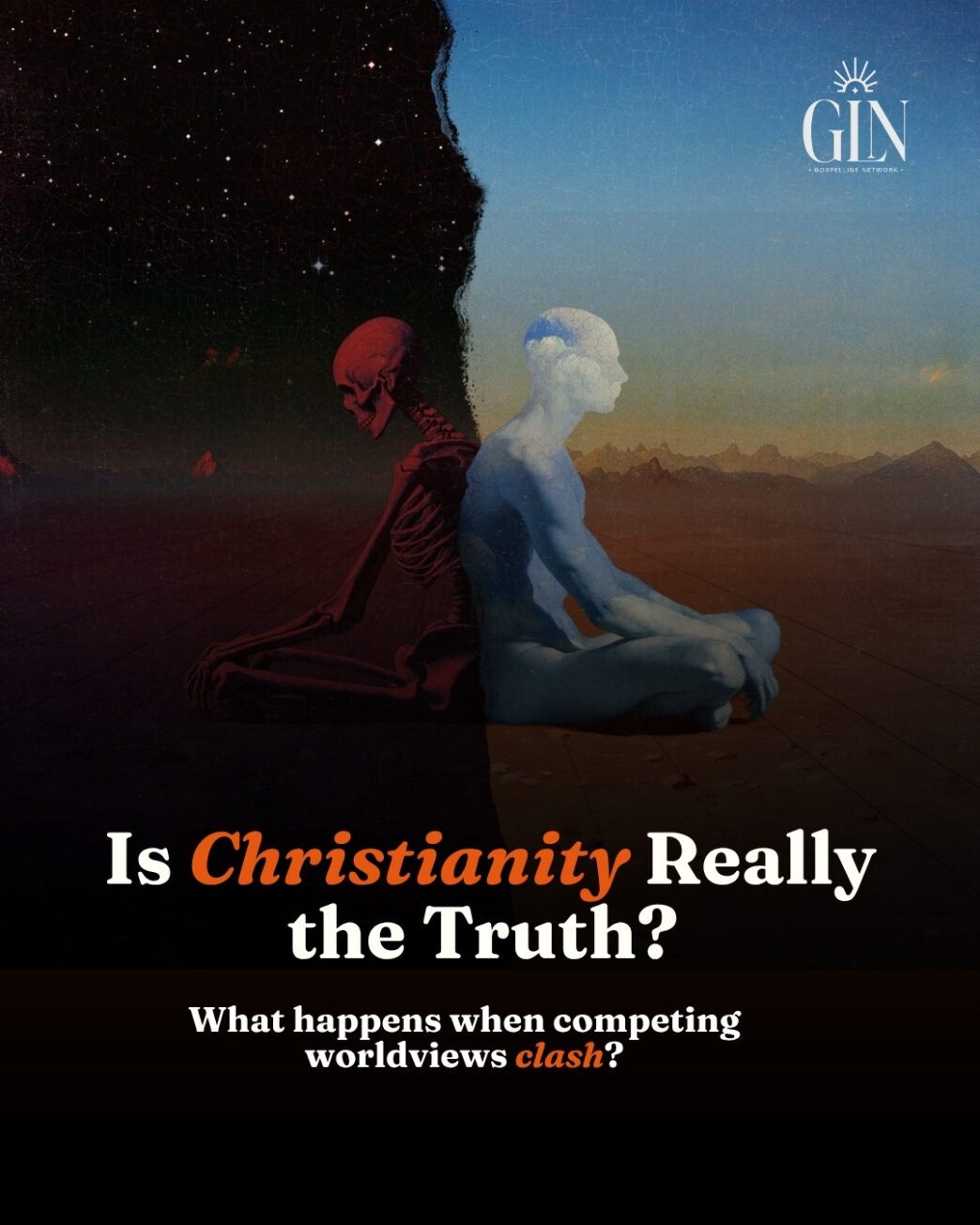
Four people from distinct backgrounds sat to answer the age-old question: Does God exist?
One grew up in a Christian home, became an atheist, and eventually returned to the faith as a pastor. Another spent years devoted to Christianity before a traumatic experience left her questioning everything she believed. A third moved from Islam to Christianity after what he described as an encounter with God. The fourth moved between religious identities and now approaches questions about God from an agnostic and atheist perspective.
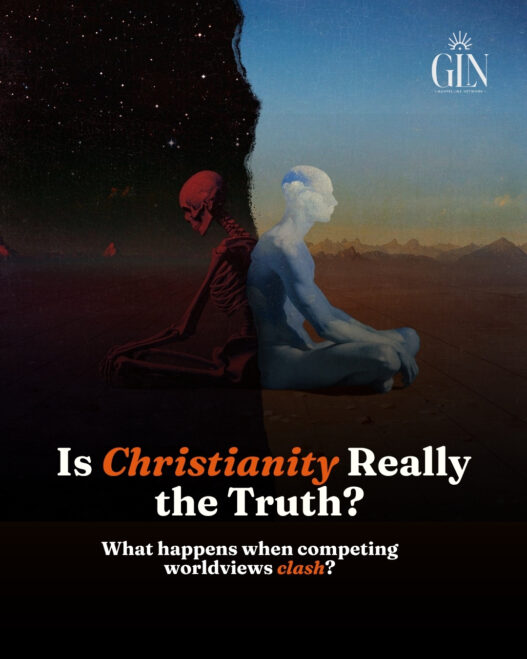
Their stories are different, but they meet at the same difficult question: Is Christianity really the truth?
This question formed the heart of the latest episode of Crossfires, titled “Is Christianity Really the Truth? Believers & Agnostics Episode.” The conversation brought together Jo-Deep, a pastor and former atheist; Lady Kay, a skeptic who walked away from Christianity after a profound crisis of faith; Mohammed Sule, a former Muslim who became a Christian; and Yinka Seth, who was raised Muslim, became Christian, explored African Traditional Religion, and today identify as atheist/agnostic.
What made the conversation compelling was not simply the disagreement between them. It was the fact that each person came into the discussion carrying experiences that had fundamentally shaped the way they understand faith, doubt, suffering and truth.
Lady Kay’s story perhaps captures the difficulty most painfully. She described a period of her life marked by a traumatic experience that left her in deep emotional distress. She prayed. She fasted. She sought God’s face. She reached out to the Christian community around her, asking for Scripture and people to pray with her.
She felt that help never came.
Eventually, she sought therapy and began confronting her pain from another direction. Her crisis of faith developed into a process of deconstruction, and she eventually left Christianity. Her story raises an uncomfortable question for the Church: What happens when someone is suffering and the people who are supposed to help them are not there?
It is easy to tell someone to pray when we are not the ones living through their pain. It is easy to quote Scripture when what the person needs may also include practical support, safety, professional help or simply someone willing to remain with them through a difficult season. Lady Kay’s experience should therefore challenge Christians to examine not only what they believe, but how they care for people who are struggling, because sometimes a crisis of faith does not begin with a theological argument. Sometimes it begins with pain.
Jo-Deep’s story offers a strikingly different journey. Raised in a Christian home by a pastor, he grew up surrounded by faith, yet there came a period when his life moved in a direction that contradicted everything he had been taught. He struggled with addiction and destructive behaviours, including stealing and womanising, and eventually reached a point where he contemplated ending his life.
At his lowest point, however, someone intervened and helped him. The support of other believers also became part of his journey back to faith. Today, he is a pastor.
His story does not erase the questions raised by Lady Kay’s experience, but it complicates them. The same Christian community that one person experienced as absent can, in another person’s story, become part of what helped save a life.
That contrast matters because people’s experiences with Christianity are not identical. Some encounter Christians who fail them. Others encounter Christians who carry them through moments when they cannot carry themselves. The question of Christianity’s truth, therefore, cannot be settled simply by pointing to either the best or worst examples of Christians.
Then there is Mohammed Sule, whose journey moves in another direction entirely. Having come from a Muslim background, Sule eventually became a Christian following what he described as an encounter with God. His story challenges the assumption that questioning religion always leads away from Christianity. For him, the search led him towards it.
His perspective also brought the conversation back to the person at the centre of Christian faith: Jesus Christ. Sule described Christianity as the only faith or religion he knows that has a sovereign God who suffers, pointing to the striking reality that the same people Jesus fed and healed would eventually demand His death.
That observation touches something fundamental about Christianity. The Christian claim is not that suffering is foreign to God. At the centre of the Christian story is Christ’s suffering, crucifixion and resurrection. Christianity presents a God who does not remain distant from human suffering but enters the human story through Jesus.
But whether that claim is convincing is another question, and that is where Yinka Seth’s perspective enters the conversation.
Yinka’s journey is built around uncertainty. Raised in a Muslim home and later becoming a Christian, he eventually encountered questions about both religious systems that he felt were not adequately answered. His search did not lead him neatly into another religious identity. Instead, he became skeptical of religious certainty and described himself in terms of atheism and agnosticism depending on the context, while still expressing belief in God’s existence.
He challenged the assumption that Christianity should automatically be regarded as the superior way of relating to God, saying, “I do not believe that Christianity is the superior way through which we can conduct our affairs or to relate with God.” He also questioned whether beliefs about God must necessarily be factually true, saying, “I believe that the things we believe about God are not important because they need to be factually true.”
His position forces Christians to confront something that can sometimes be uncomfortable: faith is not strengthened by being afraid of questions.
A person who is genuinely searching may ask why. They may challenge the evidence. They may question history, suffering, Scripture, the Church and even the existence of God. The response cannot always be anger or dismissal. Sometimes it has to be conversation.
This is not a new challenge for Christianity. Throughout Scripture, people wrestled with difficult questions. Job questioned the suffering he could not understand. The disciples themselves struggled with doubt and confusion. Thomas questioned the resurrection until he encountered what he needed to believe. The Bible does not present human beings as people who never ask questions; it presents people wrestling with questions about God, suffering, truth and faith.
At the same time, questioning Christianity does not automatically make every alternative conclusion correct.
Suffering does not by itself prove that God does not exist. The failures of Christians do not automatically establish that Christ is false. And the difficulty of proving spiritual realities does not settle every question about God. These are serious questions, but serious questions deserve serious examination rather than easy conclusions.
This is where the Church also has a responsibility to examine itself.
Christianity has been used by people at different points in history to justify power, silence people and defend actions that were inconsistent with the character of Christ. Christians have also failed people through hypocrisy, abuse, manipulation, neglect and an unwillingness to listen. Those realities should not be hidden simply because they are uncomfortable.
But acknowledging the failures of Christians is different from establishing that Christianity itself is false.
Jesus taught His followers to love their neighbours, care for the vulnerable, serve rather than dominate and treat others with dignity. He openly confronted religious hypocrisy rather than protecting it. So when Christians behave in ways that contradict those teachings, there is a legitimate reason to ask whether they are practising the faith they profess.
And perhaps this is where the Crossfires conversation becomes particularly relevant to the Church today.
Young people are asking questions that cannot always be answered with familiar religious phrases. They want to understand suffering. They want to examine evidence. They want to know why Christians sometimes behave differently from what they preach. They want to know whether faith can survive intellectual scrutiny.
The answer should not be to make questions unwelcome.
A faith that is never examined may be inherited, but it may not necessarily be understood. At the same time, intellectual scrutiny should not be confused with an automatic rejection of faith. Christianity makes claims about history, God, humanity, Jesus Christ, His death and resurrection, and those claims can be examined.
The Bible itself invites people to seek understanding. Isaiah 1:18 begins with an invitation to reason together, while 1 Peter 3:15 calls believers to be prepared to give a reason for the hope within them. Faith, therefore, should not require Christians to abandon thought. It should give them the confidence to pursue truth honestly.
That is why conversations like Crossfires matter. They create space for disagreement without pretending that every participant must arrive at the same conclusion.
Lady Kay’s story reminds the Church that people can lose faith while carrying very real wounds. Jo-Deep’s story demonstrates that a person can fall deeply into destructive patterns and still find a path back to God. Mohammed Sule’s journey shows that a search for truth can lead someone from one faith into another. Yinka’s experience shows that some people remain unconvinced by religious certainty while continuing to wrestle with questions about God.
Four journeys, four conclusions, one conversation.
Perhaps the greatest lesson is that Christianity cannot afford to be afraid of honest questions. If Christians believe their faith is true, then truth should not require fear, intimidation or the silencing of difficult conversations.
Christians must also recognise that winning an argument is not the same as winning a person.
Someone who walks away from Christianity may need more than a debate. They may need to be heard. Someone struggling with faith may need more than a Bible verse; they may need community, compassion and, when necessary, professional help. And someone asking difficult questions may need Christians who are willing to admit when they do not immediately have an answer.
The question, then, is not only whether Christianity is really the truth. It is also whether Christians are willing to examine the ways they have represented Christ to people who were searching for Him.
Because Christianity’s truth cannot be established by how loudly its followers defend it. It has to withstand the questions people bring to it, including questions born from suffering, doubt, history, reason and personal experience.
And perhaps that is where the real Crossfire begins: not when believers and skeptics disagree, but when both sides are willing to search honestly for the truth, even when the answers challenge what they already believe.